Purple Passionflower
Passiflora incarnata — Passionflower Family
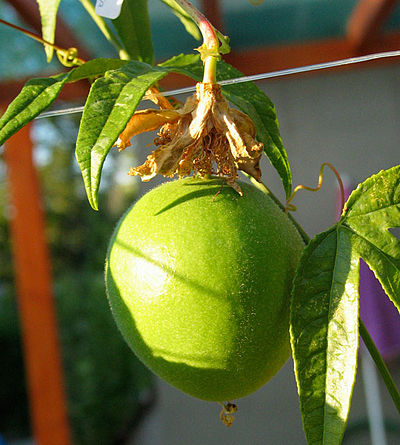
A native perennial vine in the Passionflower Family that blooms in summer.
Planting Guide
When to plant
Plant in spring after the last frost date or in early fall, 6 weeks before the first frost. Container plants establish faster than bare root.
Spacing
Space plants 4.5–6.0 feet apart. Closer spacing fills in faster and suppresses weeds; wider spacing gives each plant room to reach full size.
Root system
Roots reach at least 18 inches deep at maturity. Plant the crown at or just below soil level.
Growing Conditions
Sunlight
Part sun to part shade — 3 to 6 hours of direct sunlight. It adapts to a range of exposures and does well on the east or west side of a structure.
Soil & pH
Prefers a wide pH range from acidic to neutral (pH 6.0–7.5). Most average garden soils fall in this range; a quick soil test confirms your starting point.
Watering
Low water needs. Water weekly for the first growing season to establish roots. After establishment, natural rainfall is usually sufficient except during extreme drought. Once established (typically 1 season), it shows strong drought tolerance and can go extended periods without supplemental water.
Seasonal Care
- Cut back dead stems from last year to 2–3 inches above ground as new growth emerges.
- Top-dress with a thin layer of compost to support the season's growth.
- Deadhead spent flowers regularly to extend bloom period and prevent excessive self-seeding.
- Established plants rarely need supplemental water; deep, infrequent watering beats shallow, frequent watering.
- No major pruning needed; remove any diseased or damaged foliage promptly.
- Leave stems and seed heads standing through fall and winter to support overwintering insects and birds.
- Divide or transplant in early fall (6 weeks before first frost) for best establishment.
- Leave the plant standing — hollow stems shelter native bees and other beneficial insects overwinter.
- The seed heads attract finches and sparrows through the coldest months.
- No mulching is needed for established plants; a thin layer of leaves is fine around the crown.
Wildlife & Garden Value
Ecological benefits
- Climbing habit creates layered cover attractive to nesting birds and overwintering insects.
Landscaping uses
- Dry slope or hell strip planting where irrigation is difficult or unavailable.
- Rock garden or gravel garden specimen; excellent for low-maintenance landscapes.
- Back-of-border accent or screening plant. Tall enough to anchor larger planting beds.
Where to Buy Purple Passionflower
Buy from specialist native plant nurseries to get the true species rather than a cultivar with reduced wildlife value.
- American Meadows — native seeds and plants
- Prairie Moon Nursery — specialist native plant nursery
- Burpee — seeds with planting instructions